Buying Guides
ESD Mats and Insulating Mats: Key Differences
Learn the differences between ESD mats and electrical insulating mats, including their purpose, electrical properties, applications and key purchasing considerations.
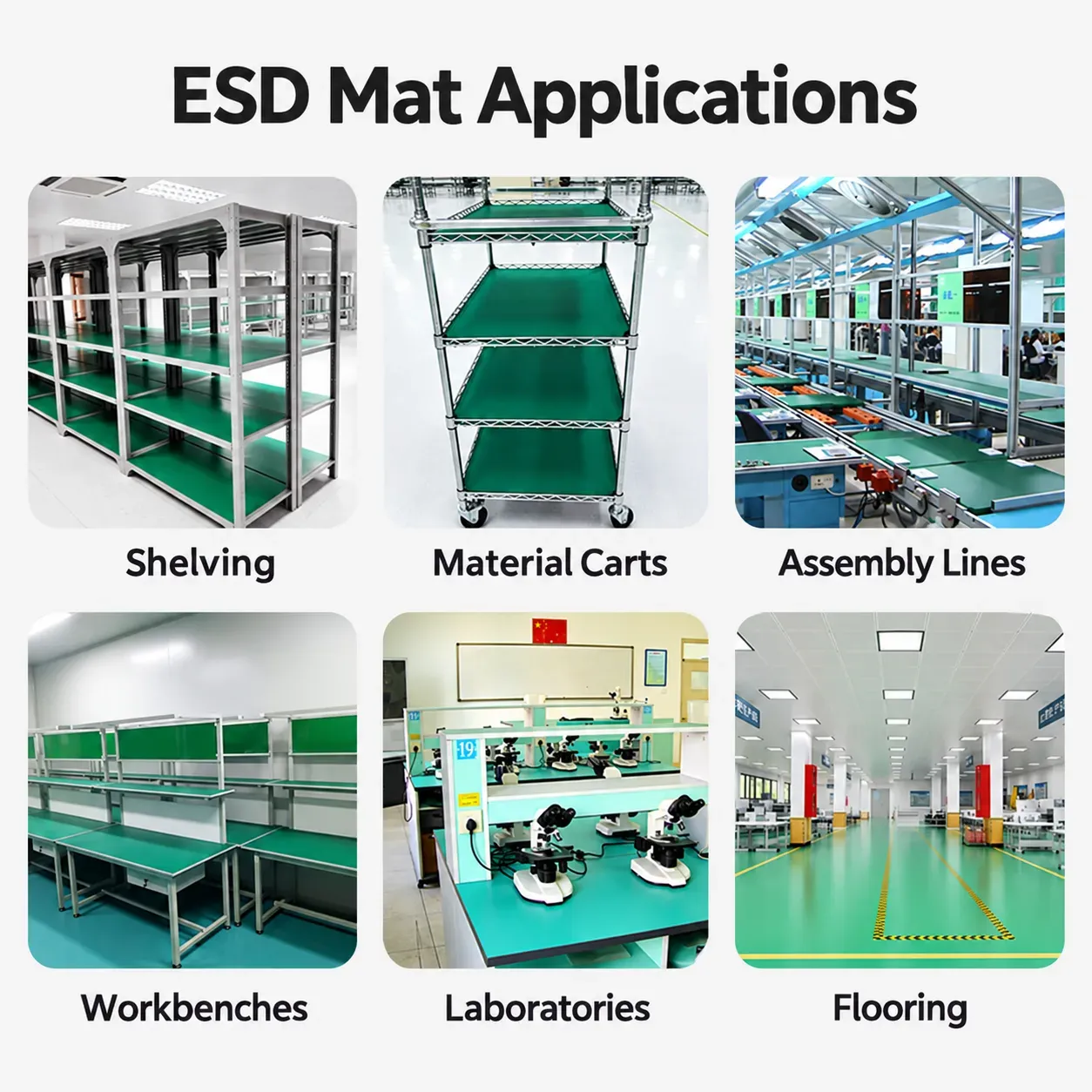
ESD mats and electrical insulating mats serve different purposes. An ESD mat helps control static electricity when handling sensitive electronic components. An electrical insulating mat is designed to provide electrical insulation for personnel in specified electrical applications.
They are not interchangeable. Choosing a mat by appearance, color or thickness alone can lead to the wrong product being used.
What Is an ESD Mat?
An ESD mat provides a conductive or static-dissipative surface as part of an electrostatic discharge control system.
At an electronics workstation, the mat is normally connected to the designated grounding arrangement. It works alongside personnel grounding and other ESD controls to help manage static charge.
Typical applications include:
• Electronics assembly workbenches
• PCB inspection stations
• Electronic component handling
• Repair benches for static-sensitive devices
An ESD table mat should be selected according to the electrical requirements and working conditions of the workstation. It should not be treated as protection against electric shock.
What Is an Electrical Insulating Mat?
An electrical insulating mat is designed to resist the passage of electrical current through the mat. Appropriately specified products are used as floor coverings for electrical protection around installations such as switchboards and control equipment.
The exact product must be suitable for the intended electrical application. Selection involves its rated working voltage, applicable requirements, condition and installation environment.
An insulating mat is one part of an electrical safety system. It does not make contact with energized equipment safe or replace safe working procedures.
ESD Mats vs. Insulating Mats
Selection Point | ESD Mat | Electrical Insulating Mat |
|---|---|---|
Primary purpose | Control static electricity around sensitive electronics | Provide electrical insulation for personnel in specified applications |
Electrical function | Provide a controlled path for charge dissipation when correctly installed | Resist current flow through the mat |
Typical location | Electronics assembly, inspection and repair workstations | Designated areas around electrical installations |
Key specifications | Relevant resistance measurements and grounding compatibility | Rated working voltage and applicable electrical insulation requirements |
Grounding approach | Usually integrated into the workstation grounding system | Not selected to provide an ESD discharge path |
Suitable substitute for the other? | No | No |
Why Color and Thickness Are Not Enough
Both types of mat can be made from rubber-based materials and may look similar. However, formulation and construction determine electrical behavior.
A black rubber sheet is not automatically conductive. A thick rubber mat is not automatically suitable for electrical insulation. A green bench mat is not automatically suitable for ESD-sensitive work.
Ask for the specifications of the exact product being quoted rather than relying on photographs or broad descriptions such as “industrial rubber mat.”
What to Confirm When Buying an ESD Mat
For an electronics workstation, provide the supplier with:
• Intended application
• Finished dimensions and thickness
• Required electrical resistance measurements
• Material and surface requirements
• Grounding connector and cord requirements
• Quantity and any custom-cut details
Clarify whether the quoted resistance refers to measurements between points on the surface or from the surface to ground. These measurements should be assessed against your organization’s ESD control plan.
Also confirm whether grounding accessories are included. A mat supplied without the required accessories may need additional components before installation.
What to Confirm When Buying an Insulating Mat
For electrical insulating matting, involve the person responsible for electrical safety in the selection.
Confirm:
• Intended equipment and location
• Required working voltage and AC or DC application
• Applicable product standard and voltage class
• Supporting product documentation and markings
• Environmental suitability
• Inspection, cleaning and replacement requirements
Do not confuse a dielectric test voltage with the permitted working voltage. Use the manufacturer’s stated rating and instructions for the specific product.
What If the Work Area Has Both Risks?
Some workplaces handle static-sensitive electronics and also contain electrical hazards. An ESD requirement does not remove the need for an electrical safety assessment.
Do not choose a grounded ESD mat for work near exposed energized conductors without an appropriate assessment. Likewise, placing an insulating mat at a workstation does not establish an ESD-controlled surface.
The workstation arrangement should address both risks through suitable equipment, procedures and qualified review.
Frequently Asked Questions
Can an ESD mat protect against electric shock?
An ESD rating does not establish electrical shock protection. Do not use an ESD mat as a substitute for appropriately rated electrical insulating matting.
Can an insulating mat replace an ESD table mat?
No. Electrical insulation does not provide the controlled discharge function required from an ESD worksurface.
Is a rubber mat always an insulating mat?
No. Rubber products can be formulated for different electrical properties. Confirm the intended application and documented specifications.
Does heat resistance mean electrical insulation?
No. Heat resistance describes thermal performance. ESD behavior and electrical insulation are separate properties that need their own specifications.
Selecting a Mat for Your Workstation
Begin with the application: static control for electronics, electrical insulation for personnel, or a work area requiring assessment of both risks.
For ESD workbench mat enquiries, send Specific Materials your required dimensions, quantity, intended use and electrical requirements. Include a drawing if you need custom shapes, holes or cutouts so we can review the requirement before quoting.