Buying Guides
ESD Rubber Workbench Mats for Laboratories: A Practical Setup Guide
Laboratory benches concentrate sensitive instruments and prototype work on one surface. Here is how an ESD rubber workbench mat fits into a static-safe lab setup - and what to check before ordering.
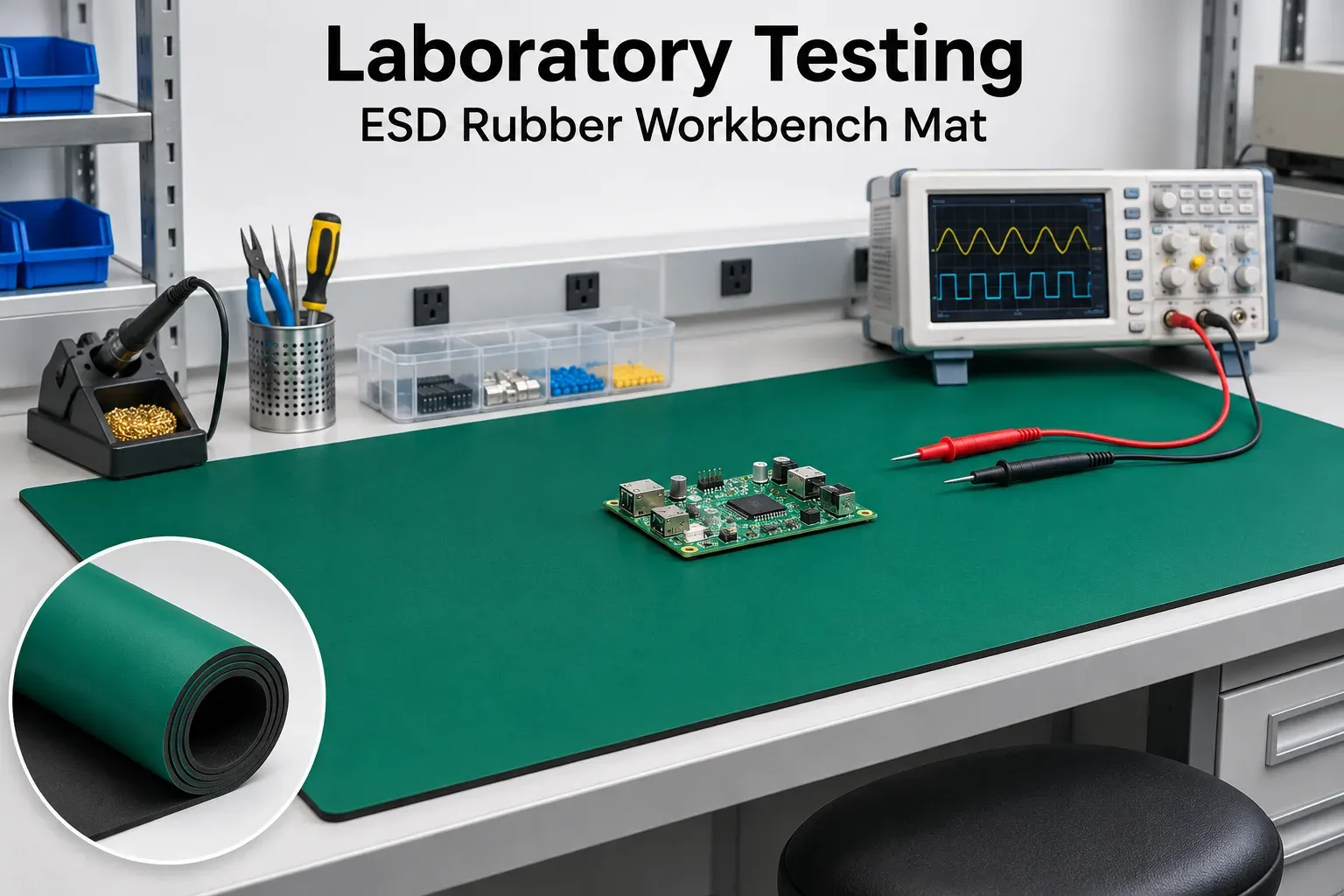
Laboratory benches are where measurements matter most: sensitive instruments, prototype boards and calibration work all share the same bench top. In that setting, an ESD rubber workbench mat is not an accessory - it is the base layer of a static-safe test setup.
Why rubber suits laboratory work
A two-layer rubber mat combines a green static-dissipative working surface with a black conductive backing layer. The dissipative surface drains charges gently - fast enough to protect components, controlled enough not to disturb sensitive measurements. Rubber also stays flexible and tough in daily use: it stays flexible, resists wear from instruments and fixtures, and wipes clean after spills.
Grounding completes the setup
The mat only works as part of a grounded setup. Connect the mat to a verified ground through a grounding cord and grounding snap, and keep the wrist strap on the same ground point when handling boards. With the surface, the operator and the ground on one path, static from daily bench work has somewhere to go.
What to check before ordering
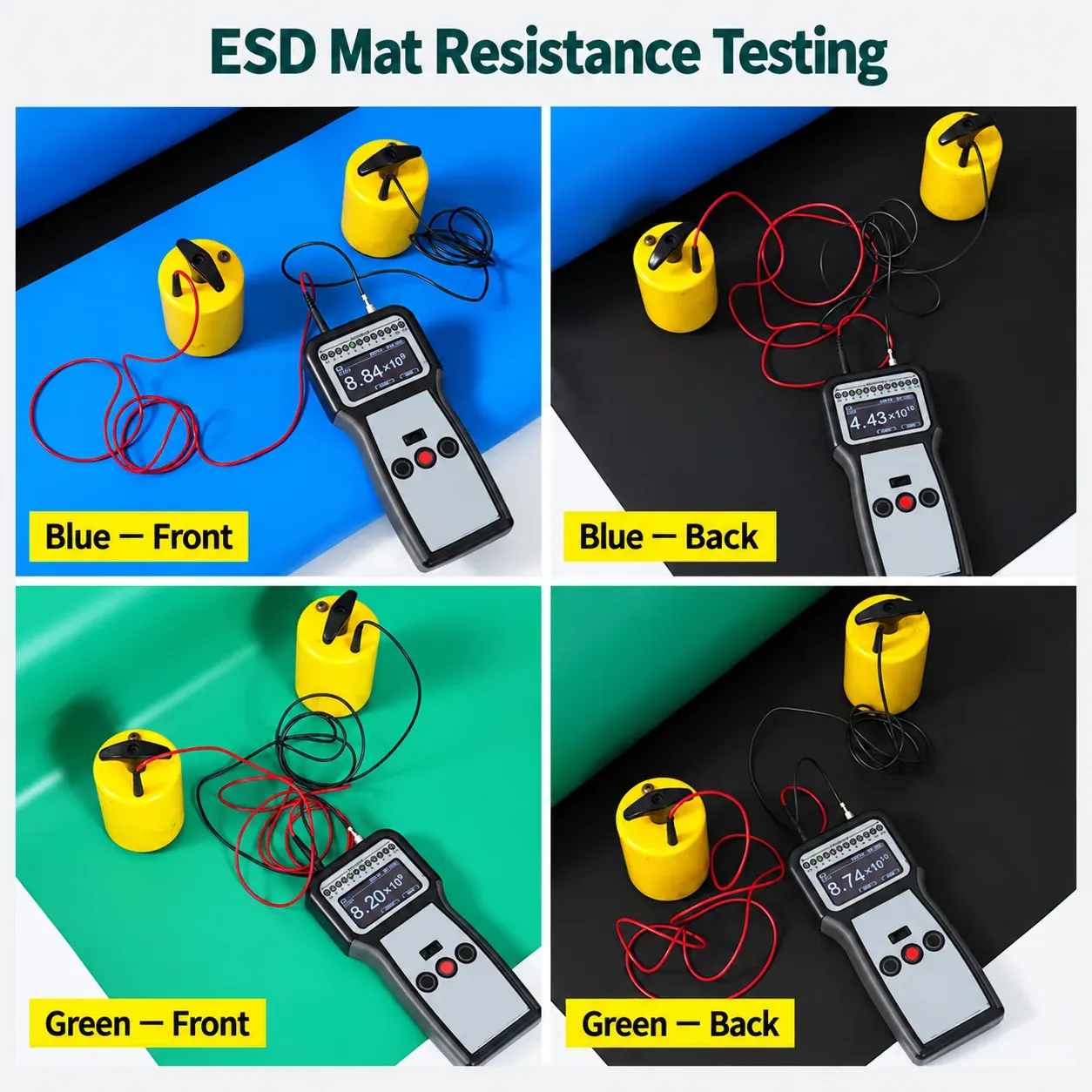
Confirm three things in writing: the surface resistance range (a static-dissipative surface typically reads 10⁶–10⁹ Ω), the conductive backing range, and the mat size against your bench. Most suppliers cut rubber mats to custom sizes, so measure the bench first - a mat that covers the full working area protects more than a mat that covers the middle.
A practical setup checklist
Lay the mat flat with no lifted corners, fit the grounding snap at one corner, route the grounding cord to the common ground point, and keep soldering irons, meters and component trays on the mat surface. Re-check the surface with a resistance meter when the lab is reorganized - it takes a minute and confirms the setup still works.
Ordering a laboratory mat
Send the bench dimensions, the application and the quantity. A supplier that supports small-batch orders and paid samples can cut the mat to your bench size - ask whether the grounding snaps can be fitted before shipping, which makes the first evaluation straightforward.